
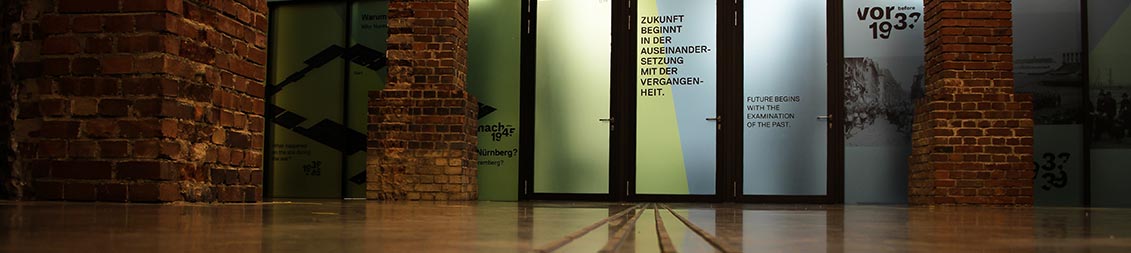

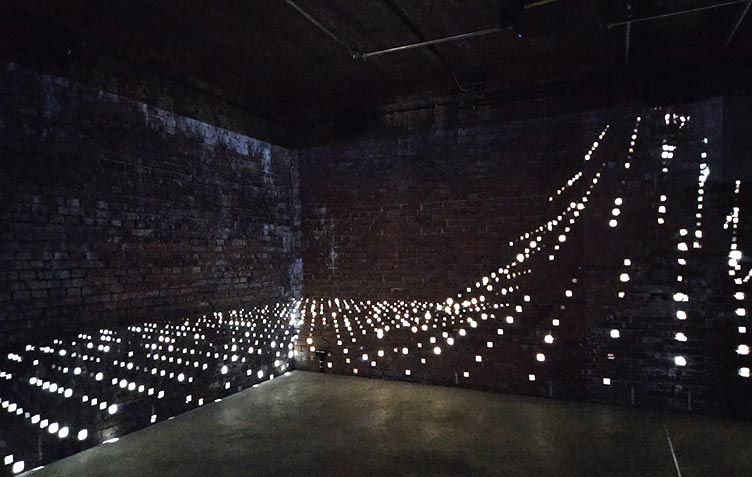
The history of Nuremberg and the Nazi Party Rallies is told chronologically in seven chapters covering four periods of time. The focus is on the history of the location. Events at the Nazi Party Rally Grounds and in the city and how these were connected form the starting point – abstract history is thus brought to life through concrete examples.
Especially for Nuremberg's residents, this approach with a focus on local history enables them to learn about their city's past in new ways. At the same time, the perspective often broadens, moving from events in Nuremberg to developments in Germany as a whole and in the international arena.
Period 1
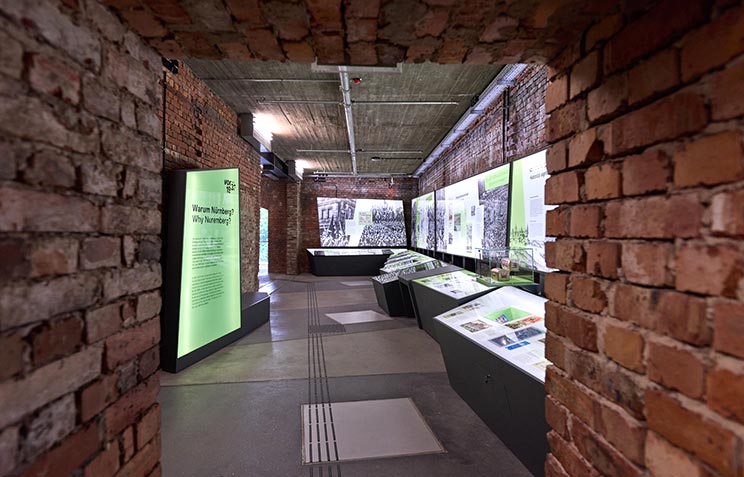
The exhibition begins with the question of why Nuremberg was chosen as the "City of Nazi Party Rallies".
Before 1933 | Why Nuremberg?
In 1933, Adolf Hitler declared Nuremberg the "City of Nazi Party Rallies". The choice of Nuremberg was no coincidence. Nazi propaganda exploited the medieval imperial city as a symbolic backdrop for its own ends. By the 1920s, it had become an easily accessible industrial centre and an important venue for large events held by various political groups. The Nazis had already gained considerable political support in Nuremberg and Franconia at the German Day festival in 1923 and at the 1927 and 1929 party rallies. On 9 March 1933, swastika flags flew from the city's most important public buildings. Hermann Luppe was replaced as mayor by Nazi Party councillor Willy Liebel. The Weimar Republic was crushed with brutal violence.
Period 2
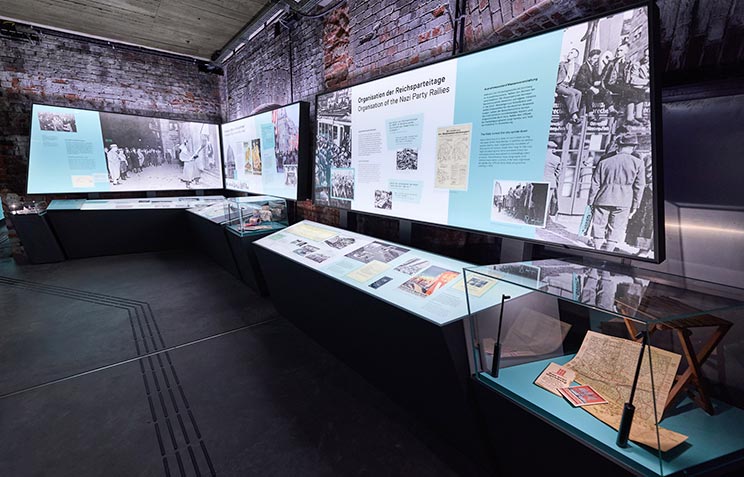
The Nazi Party Rallies from 1933 to 1939 are the main events covered in the second period. The exhibition analyses their role as a key propaganda vehicle for the Nazi regime and illuminates their development, staging and impact.
1933–1939 | The Nazi Party Rallies
After the Nazis came to power, the party and state were fused into a single entity, and Nazi Party Rallies evolved into state festivals. By 1938, their programme, duration and dimensions had grown considerably. The 1933 spectacle lasted five days. In 1934, it was expanded to seven and, in 1937, to eight days. Ten days were even planned for 1939. The regime sought to use the rallies to demonstrate its strength and claim to power, to present the ideals of the Nazi state and communicate political messages. Up to a million people participated in these self-aggrandising rallies.
The City of Nuremberg not only hosted the events but also benefited from its status as "City of Nazi Party Rallies". At the same time, anti-Jewish measures were stepped up – with fatal consequences for Nuremberg's Jewish population.
1933–1939 | The Nazi Party Rally Grounds as a Construction Project
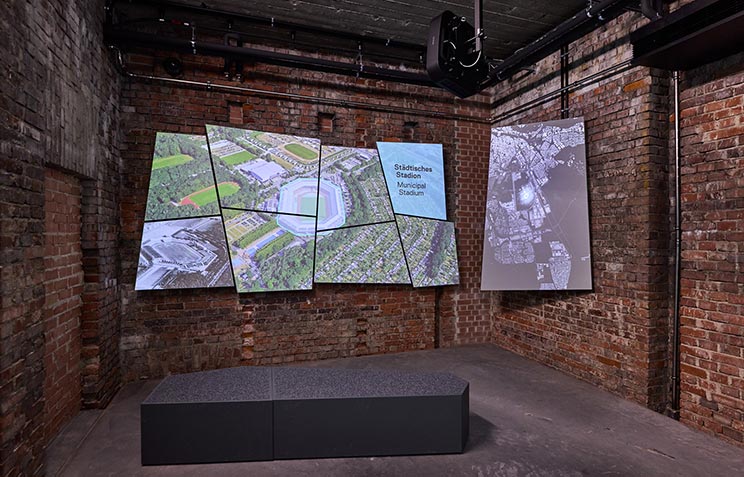
The Nazi Party Rally Grounds represented one of the Nazi state's key construction projects, whose main aim was to promote the Nazis' image. Architect Albert Speer's overall plan was unprecedented in its dimensions. A huge area was required to accommodate ever-larger buildings as well as a road to allow parades to march right into the city centre. Landscape and old buildings were ruthlessly destroyed, as was the zoo. Plans were made for enormous quantities of granite to be delivered from concentration camps. Many buildings were never completed, however.
1933–1939 | Staging the Nazi Party Rallies
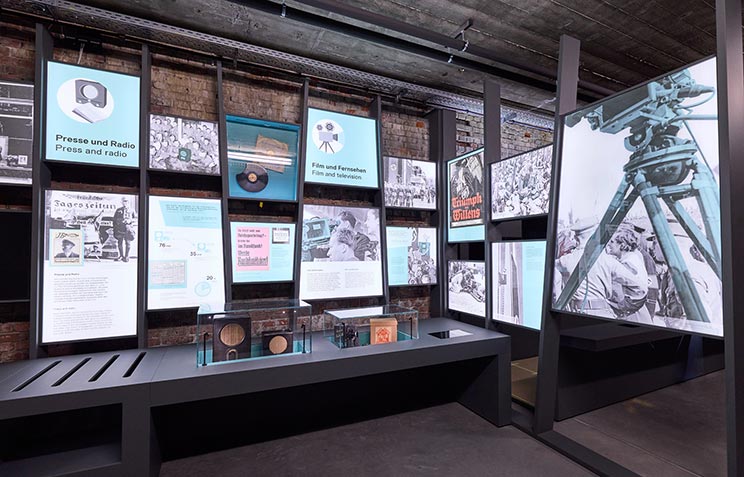
Employing architecture, art and music, the Nazi state used the Party Rally Grounds as a stage to showcase itself. Numerous architects, artists and cultural workers dedicated themselves to stirring the emotions of the crowds gathered there. Official propaganda photos and private snapshots provided those unable to attend with a picture of what they had missed. Modern media – radio, television and film – were deployed to enable people across the Reich to partake in the experience, albeit with limited success.
1933–1939 | The Nazi Party Rally Experience
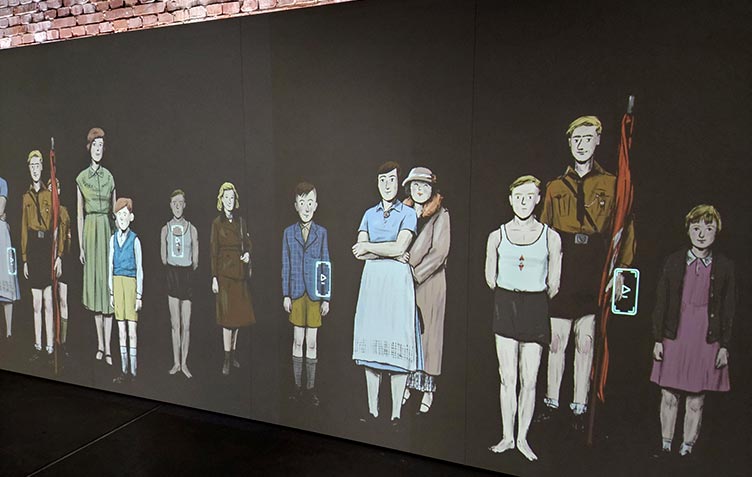
Eyewitness reports by Germans and foreigners show that many people perceived the Nazi Party Rallies as an impressive community experience. Many truly felt the idea of a "people's community" propagated at the rallies was real, and the experience provided a sense of belonging and enabled them to feel part of something greater. Nevertheless, it is difficult to draw clear conclusions: not every negative statement can be put down to opposition to the Nazis, and not every affirmative comment about the rallies reflects firm ideological conviction.
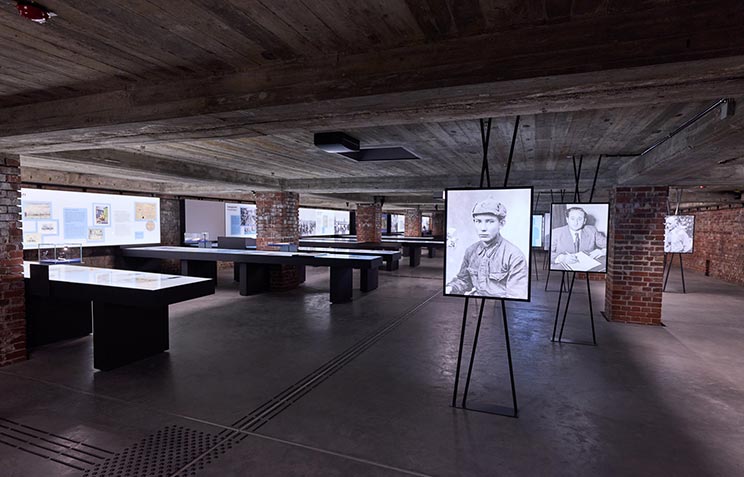
Period 3
A separate chapter is devoted to the years 1939 to 1945. It covers prisoners of war, forced labour and deportation – topics that are closely connected with the historic location.
1939–1945 | The Grounds during the War
World War II began with the German invasion of Poland in September 1939. By 1945, thousands of people, mainly from Europe and the Soviet Union, had been brought to the Nazi Party Rally Grounds against their will. Prisoners of war and civilians, women, men and children were imprisoned in camps here and made to perform forced labour. At least 5,000 people perished; some were deliberately murdered. Over 2,000 Jews from Franconia were deported via Märzfeld Station to ghettos and extermination camps. Only a few survived.
At the same time, the war had an increasing impact on the lives of Nuremberg's population. As an arms production centre and transport hub as well as a symbolic location for the Nazis, Nuremberg became a target of Allied air raids from 1942 onwards.
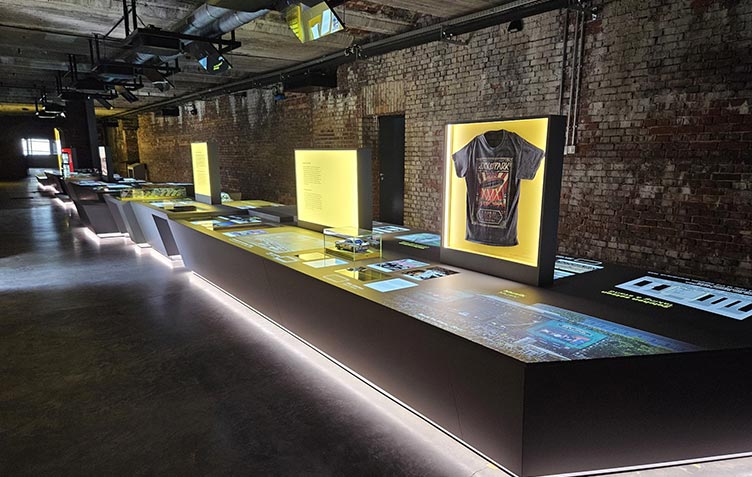
Period 4
The tour ends with the question of how to approach the historic legacy of the Nazi Party Rally Grounds and covers the period from 1945 to the present day.
Post-1945 | What now, Nuremberg?
Nuremberg's inhabitants continued to feel the effects of war and dictatorship on their city even after 1945. Despite the democratic new beginning and the legal reckoning with the Nazi era, former Nazis were still in positions of power, and Nazi ideology remained prevalent. The city sought an appropriate way to deal with its recent history, particularly the former Nazi Party Rally Grounds, but not until the mid-1980s did it begin to present information about this chapter in its history. Today, the Grounds are home not only to a varied remembrance culture, but also to concerts, sports events and recreation.
The exhibition texts are available in German and English. In addition, all visitors receive a media guide – included in the admission price – that features audio content and personalized audio tours.
Media Guide